
MakerRoo Update: Pivoting Back, Trimming Features and Getting to Launch
The short version
It’s been quiet here for a while. If you joined the waitlist months back and started wondering if anything was still moving, fair question. That’s on us.
We spent the last few months chasing a second product: a full switch, not just a retrofit board for Deta. We got deep into it, but it kept dragging out and pushing any real launch further away.
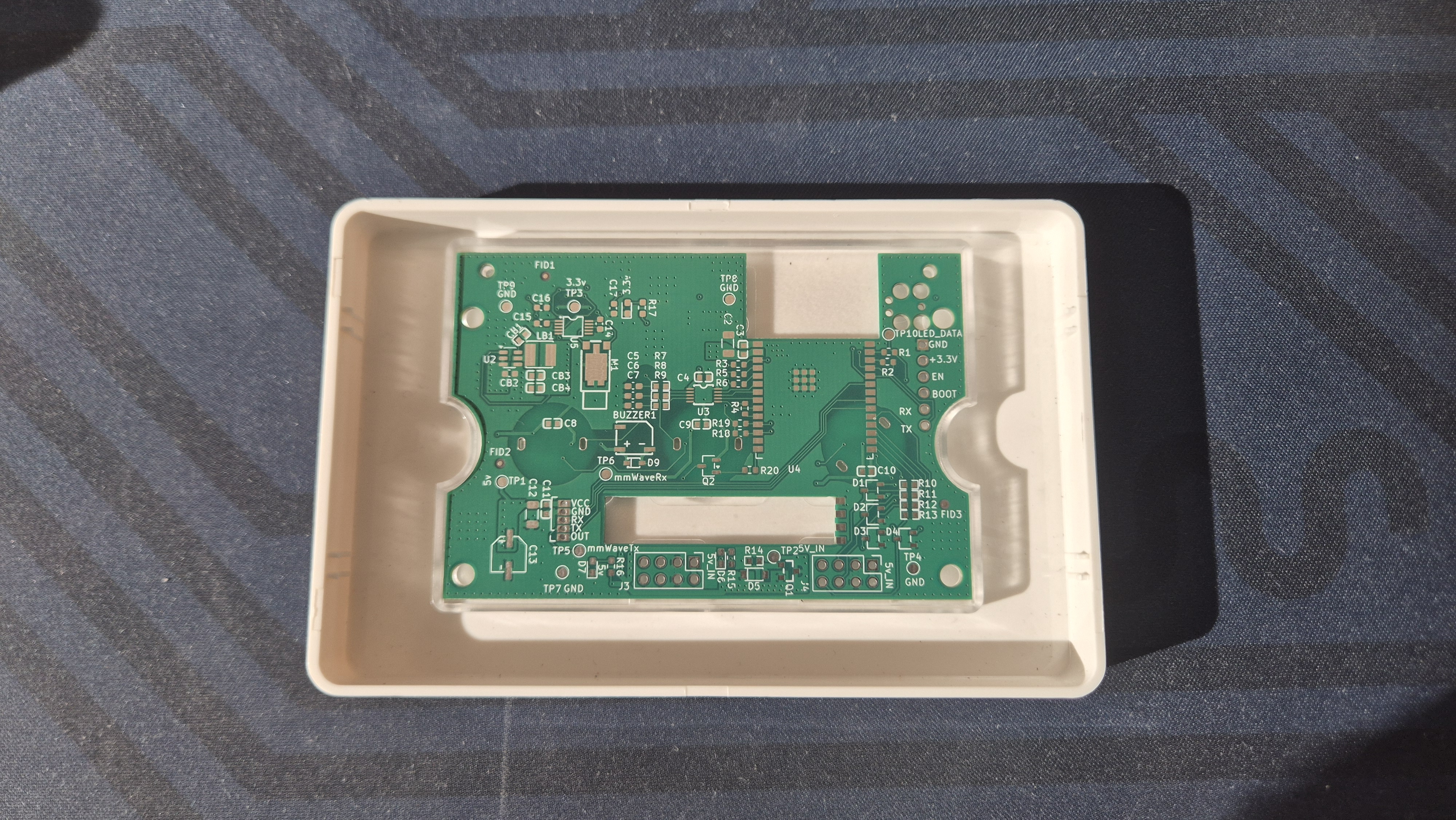
So we’re switching back. The retrofit board - the one that’s already real - is what’s shipping first. Pro is fabbed, just waiting on build and bring-up. From here, the focus is getting it out the door.
Where we went: the complete unit
There’s one thing about the retrofit board that’s always bugged us: you need a Deta switch to install it.
So we went for the obvious fix: build the whole thing ourselves. A complete switch, relay base and all, that anyone could just buy and install.
We did the full loop: talked to overseas manufacturers, figured out what it takes to commission a base, and got sample units to tear down. Pulled the logic, freed them from Tuya jail, and dropped in our own ESP so they run ESPHome like the rest of our stuff. All the current features would carry over, and owning the plastics means we could finally add the things that just won’t fit in a retrofit.
It would have been cheaper for you too. A full unit would land at about the same price as a Deta smart switch from Bunnings. The retrofit path means you’re buying that switch plus our board.
Quick note for anyone without a Deta smart switch: you’re not ruled out. The plain touch Deta (the non-smart one) works with our board too, and it’s cheaper to start from. You don’t need to buy a smart switch just to swap out the brains.
Why it stalled
Building custom hardware isn’t just one project. It’s a board, a mechanism, tooling, plastics, supply chain, and compliance for all of it. Each has its own lead time, and they never line up as neatly as you want. The finish line kept moving away.
The second reason is less flattering. We thought the retrofit path was a legal grey area, and building from scratch would be simpler. Turns out we had it backwards. We’ve done the homework on the retrofit, sorted the legal and compliance side, and it’s basically good to go. The route we thought was risky is actually the one we can ship.
The complete unit isn’t cancelled. Its logic board comes from the retrofit: same ESP32-C6, same touch and LED setup, same ESPHome work. Shipping the retrofit first actually makes the full unit easier, not harder.
What we were doing while we were quiet
Alongside the hardware, we’ve been doing the unglamorous groundwork you need before you can take anyone’s money:
- Working through the legal position on the retrofit path properly
- Insurance
- Compliance due diligence for the retrofit product specifically
- Taking the prototype toward a production-ready design through DFM
- Building the pre-order page
None of this makes for good photos, but all of it was blocking a launch.
One wall, three casualties
With software, you ship and fix it Tuesday. With hardware, you commit, pay for a run, and live with it. That’s why this next bit took so long.
A retrofit board lives inside someone else’s enclosure. We don’t choose the plastics or the clearances, and we can’t put a hole anywhere. Three things we wanted all died against that one wall.
Lux, temperature, humidity. We didn’t just sketch these and give up - they’re on the board. Pro has a BH1750FVI light sensor and an SHT30 temp/humidity sensor designed in and laid out.
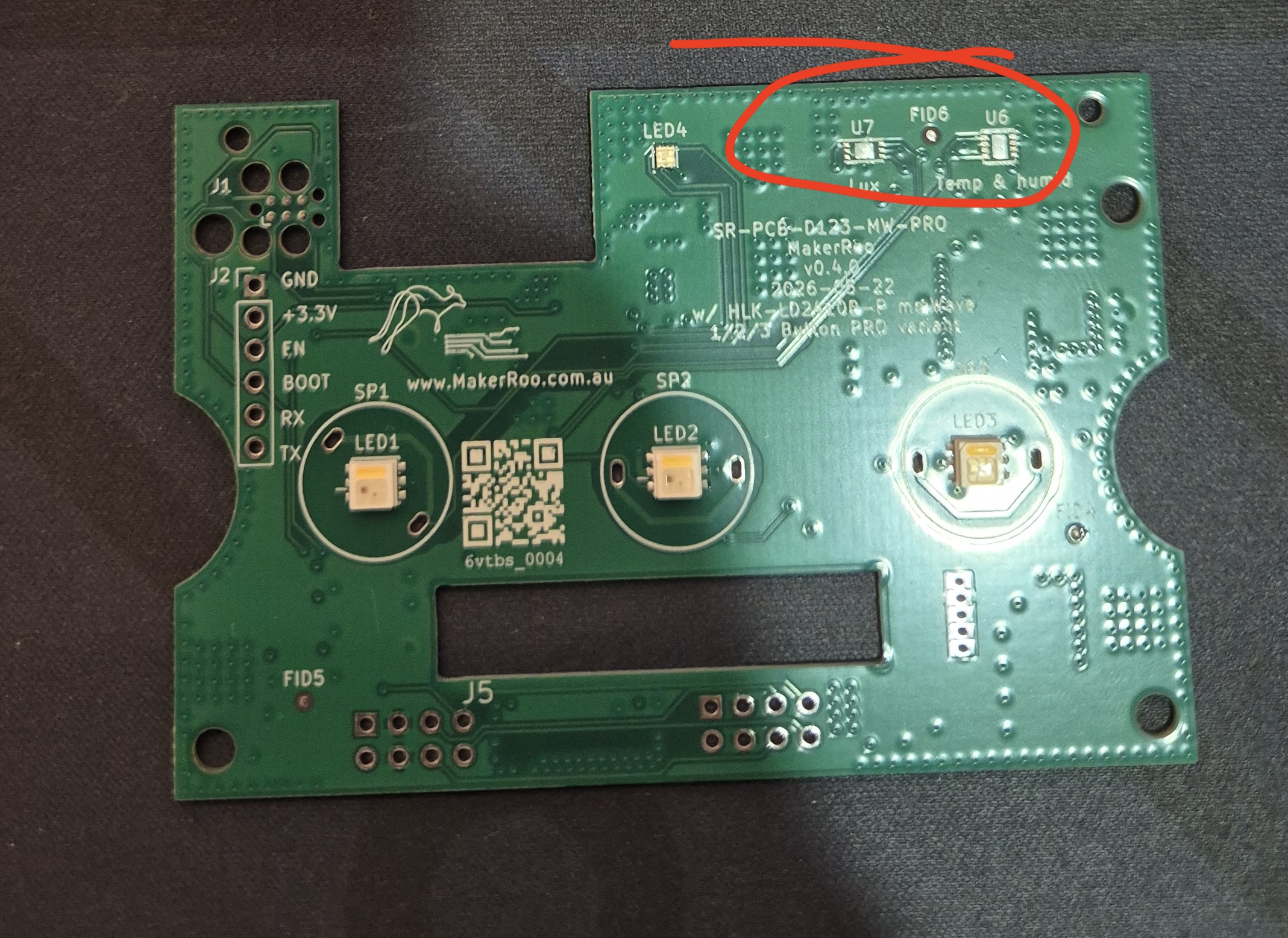
Then you put the Deta button plate over the top.
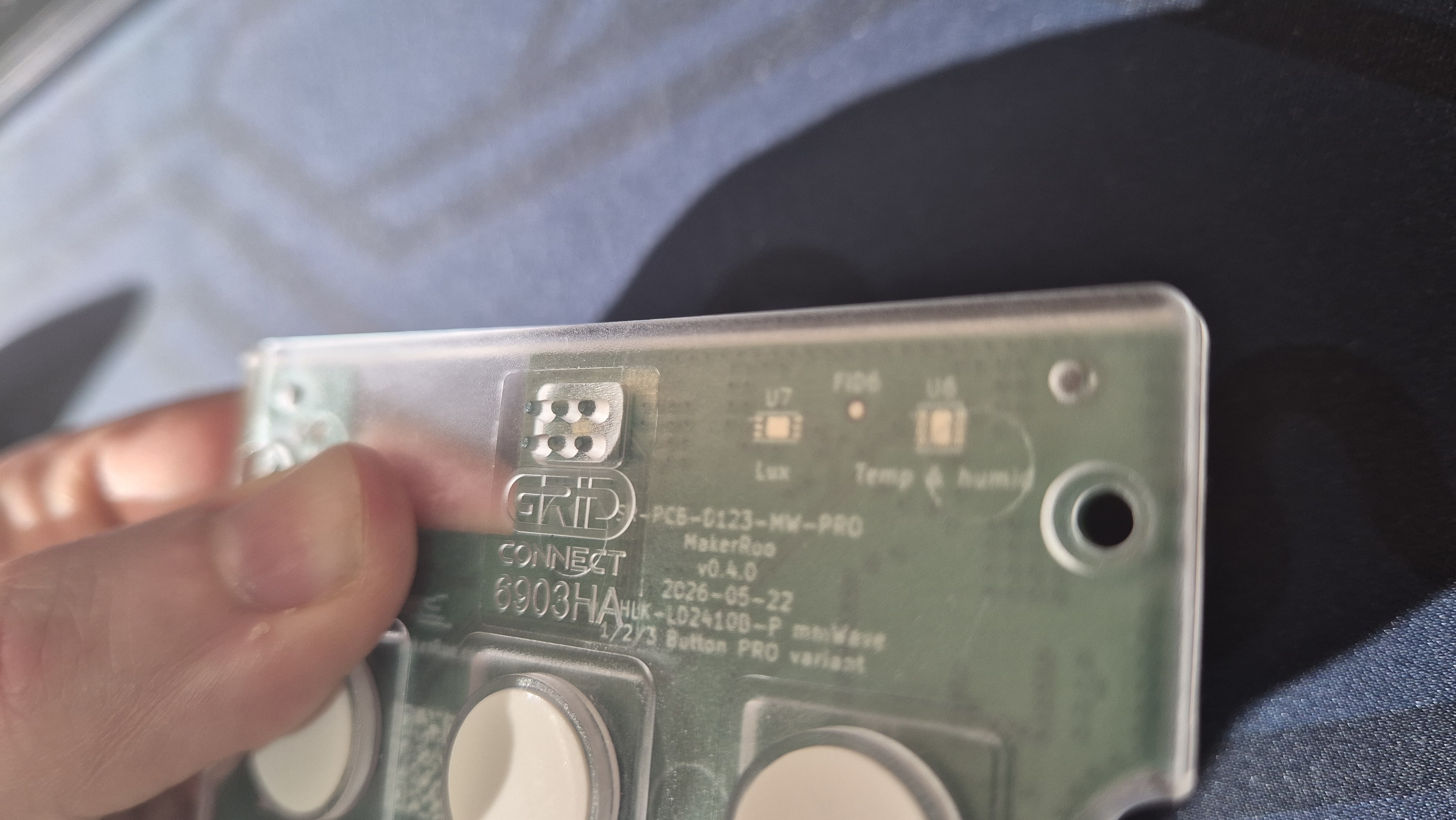
There’s barely room, and no opening. A lux sensor sealed inside an enclosure it can’t see out of is just a part you paid for. Temp and humidity have the same problem, and they’re stuck in a sealed cavity next to a board that generates its own heat. They’d tell you about the switch, not the room. Shipping a reading we know is wrong is worse than shipping nothing.
A proper speaker was on the list. We wanted the switches to sound alerts from Home Assistant - washing machine done, door left open. There’s a buzzer on the board, and it works, but we spent too long thinking we could make it sound good in software later. We can’t, and we’d rather tell you why than quietly ship something disappointing.
We ship ESPHome, which means we hold ourselves to what stock ESPHome does, because you are going to reflash this thing, and a feature that only lives in some custom component we wrote isn’t a promise we can keep. Stock ESPHome gives us RTTTL, the old Nokia ringtone format: real melodies with tempo and rests, but monophonic square waves with no envelope. That is the ceiling, and ESPHome sets it rather than the buzzer, so that a fancier part wouldn’t change it. The proper fix is an I2S audio path out to a small speaker, which ESPHome supports but not on the ESP32-C6, where the request has sat open since 2023.
And even if that landed tomorrow, we’d still hit the wall. A speaker needs an acoustic opening. A buzzer can shout through a sealed cavity because it only needs to be loud at one frequency. Good audio needs a hole in the plastic, and the plastic isn’t ours.
So the buzzer stays. It’s for alerts, and we’ll write good ones. It’s not a speaker and we won’t pretend it is.
Haptics: this one we got right
A lot of you told us the same thing about capacitive touch: there is no feedback. You press, and you are not sure you pressed.
The board uses a DRV2605L - a real haptic driver with a library of effects, not just a motor on a pin. Add that to the indented plastic that tells your finger where the button is, the backlight that comes up dim when the mmWave sensor sees a hand, and an instant click of vibration when you press. You get most of what people miss about a mechanical switch, just without the moving parts.
Which sorted out that we’d been muddling for months: haptics do the click; the buzzer does the alerts. We kept trying to make the buzzer feel like a button press, and it was never going to work.
One we haven’t got to yet: we want to look at the hardware protocol on the Deta fan controller and dimmer to see if our board can drive those bases too. The pinout looks the same and we think it’s just a software config, but we need to check the hardware is actually compatible before promising anything.
Over to you
Both the buzzer and haptic driver are already on the fabbed board. No more design rounds needed, which changes what we’re asking you.
Not in question: we are launching with the 3-gang button PCB, which works across 1-, 2-, and 3-gang Deta switches: one board, all three.
The open question is whether we launch one version or two.
We spent a while thinking the split would be a stripped-back board without a buzzer and haptics, then actually looked at the numbers. The haptic driver, motor, and buzzer together cost us about half what the mmWave module does on its own. Taking them out would save a few bucks and remove the thing that makes the buttons feel like buttons - which is the main complaint about capacitive touch. So they stay, on every board.
The mmWave module is a different story. It’s easily the most expensive part, and unlike haptics, it’s not always worth having. mmWave only earns its keep where the switch has something to look at. One facing an open plan living area has the run of the room. One sitting a metre from a blank wall across a hallway is just a sensor staring at plasterboard, and you paid extra for it.
The good news is how we make it. The mmWave module goes on after main assembly, so both versions use the same PCB and come off the same production run. Offering the cheaper one costs us almost nothing and doesn’t delay anything - both ship at the same time. We expected this to be a ‘wait longer for more choice’ trade, but it’s not.
So this is just a demand question, and your answers decide how many mmWave modules we buy:
Would you want the cheaper version without mmWave, and in what mix? If you’re doing a whole house, how many of your switches actually face something worth sensing, and how many are just looking at a wall?
Answer in the poll, or just drop real numbers in Discord. Rough guesses are fine - that’s what forecasting is.
Where things stand
The Pro board is fabbed and awaiting build and bring-up.
Lux and temperature sensors come off the design.
Pre-order page is in build.
The complete unit is parked, not cancelled, and it is where the sensors and the proper speaker go.
Rather than leave that as a list, here’s the whole run to launch in one picture - what’s done, what’s in progress, and what’s left before pre-orders open.
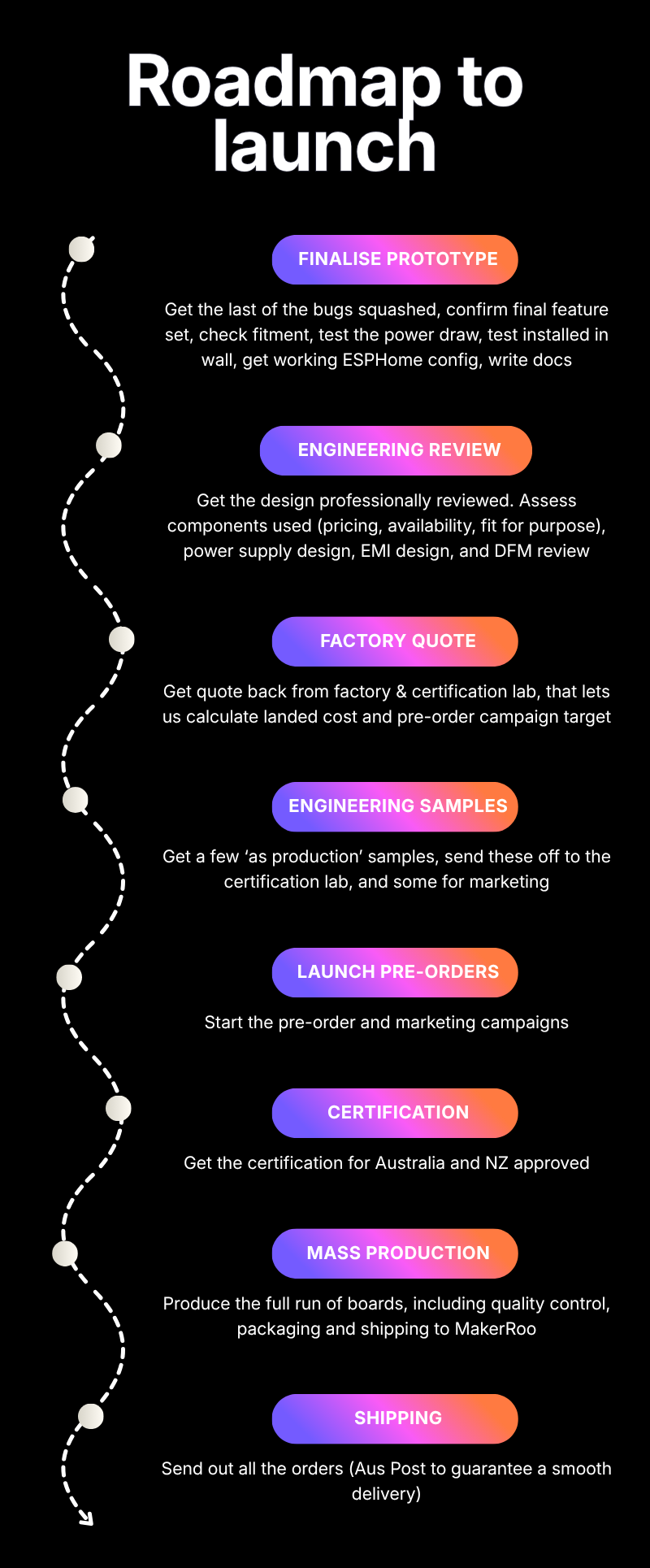
A couple of those are out of our hands, mostly compliance turnaround. The rest is on us.
We know a few quiet months is a lot to ask from a waitlist, and we appreciate everyone still here. Here’s what you can do next:
- Vote in the poll to let us know your preference for mmWave or standard versions.
- Watch your inbox for updates when pre-orders open.
- If you know someone running Deta switches on Home Assistant, send them our way.
Your feedback and support will help shape the launch.
If you’re not on the waitlist yet, sign up here. And if you want to follow along more closely or have questions, the Discord is the best place.
Cheers, Sam.
Comments
Add a comment on Discord
New to our Discord? Join first, then look for the thread titled "MakerRoo Update: Pivoting Back, Trimming Features and Getting to Launch" in #blog-discussions. Then your comments will appear here!